
Homeowners researching polyaspartic flooring often come across oversimplified claims that can lead to confusion or poor decisions. In reality, a professional garage floor coating system relies on multiple layers of coatings materials working together, each with a specific role. Let’s clear up some of the most common myths surrounding epoxy and polyurea-polyaspartic coatings, especially for Tucson homes.
Myth 1: A Polyaspartic Coating Can Be Applied Directly to Concrete
One of the most common misconceptions is that polyaspartic coatings can be applied direct to bare concrete (as they are in “1-day” coating systems). While polyurea and polyaspartic coatings cure quickly and offer excellent surface protection, they are not recommended for direct-to-concrete application. Why? Because polyurea and polyaspartics go down thinly (they are not “high-build” coatings) and cure so quickly, especially in the presence of medium to high moisture, that they fail to deeply penetrate the concrete slab. Therefore, when used as a direct-to-concrete primer coat, the wafer-thin, poorly penetrating polyurea-polyaspartic coating is susceptible to high moisture (hydrostatic) pressures over time. Yes, even in Tucson, concrete naturally retains moisture.
Without proper moisture mitigation, application of a polyurea-polyaspartic direct-to-concrete can lead to blistering or delamination over time. This is why professional systems always start with a moisture-mitigating epoxy primer.
Myth 2: Epoxy Flooring Is Unnecessary
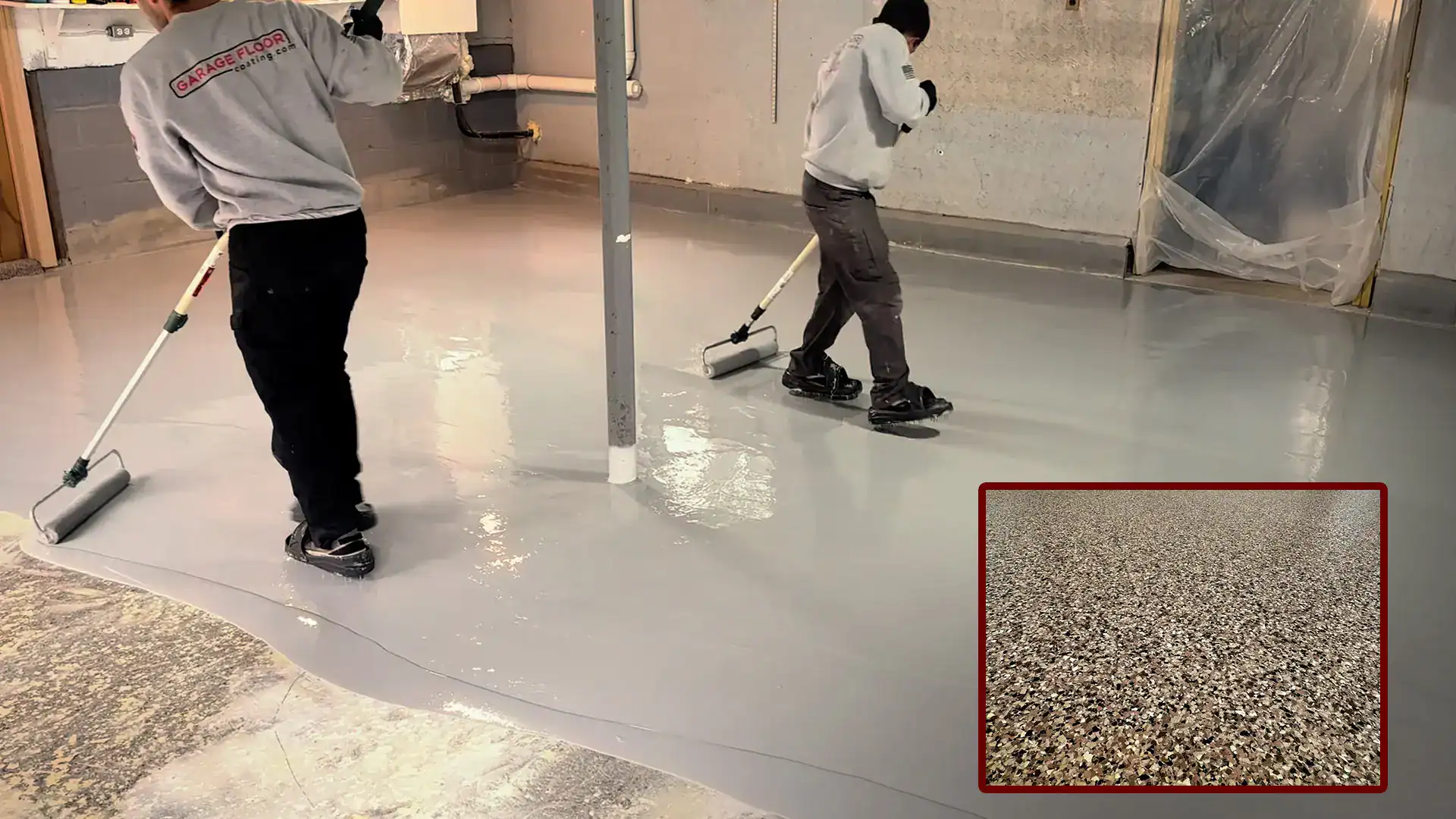
Another myth is that an epoxy coating is an unnecessary addition. In reality, epoxy remains one of the most important components of a long-lasting garage floor coating. A moisture-mitigating epoxy can be applied thickly and bonds deeply to concrete, making it an ideal direct-to-concrete primer coat.
Epoxy floor coatings are also commonly used in indoor spaces where UV exposure is limited. While epoxy has lower UV resistance than polyaspartic products, its strength lies in creating a stable foundation beneath the surface.
Myth 3: A 1-day Garage Floor Coating Is Always Better
Speed is often marketed as a benefit, but a 1-day installation is rarely the best option. The right installation timeline depends on concrete moisture levels and site conditions. In most cases, a 2-day system is necessary to provide moisture mitigation and proper curing to ensure long-term performance. (It typically takes 2 days because the moisture-mitigating epoxy primer cures far slower than a polyurea-polyaspartic).
Myth 4: Polyaspartic Flooring Is Only About Looks
While a polyaspartic coating offers a clean, high-end appearance, its real value lies in performance. Polyurea-polyaspartic coatings provide exceptional resistance to UV exposure, chemicals, oils, and hot tire transfer, which is especially important in Tucson’s intense sun and heat. In conclusion, these coatings are superb top coats, but lousy primer (base) coats.
Seeing the System Come Together
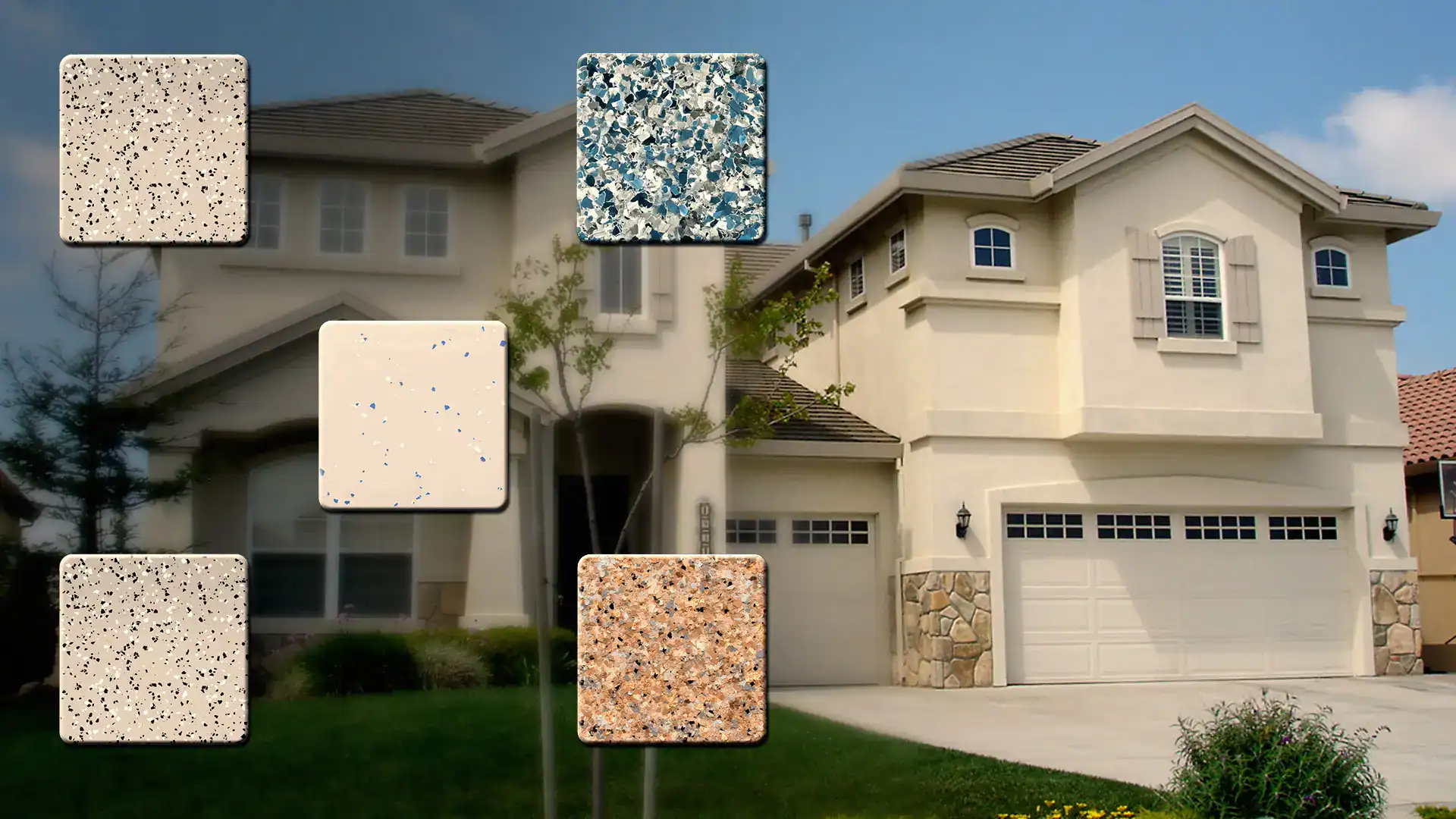
GarageFloorCoating.com (Tucson) offers a Live Coatings Visualizer, allowing homeowners to preview colors and flake blends in their actual garage or home. It is an easy way to explore how different polyaspartic flooring styles will look once the full system is installed.
If you are considering hybrid epoxy and polyaspartic flooring for your Tucson garage, we’re ready to help. Contact our team today to schedule a consultation and design a garage floor coating system built for durability, performance, and long-term confidence.